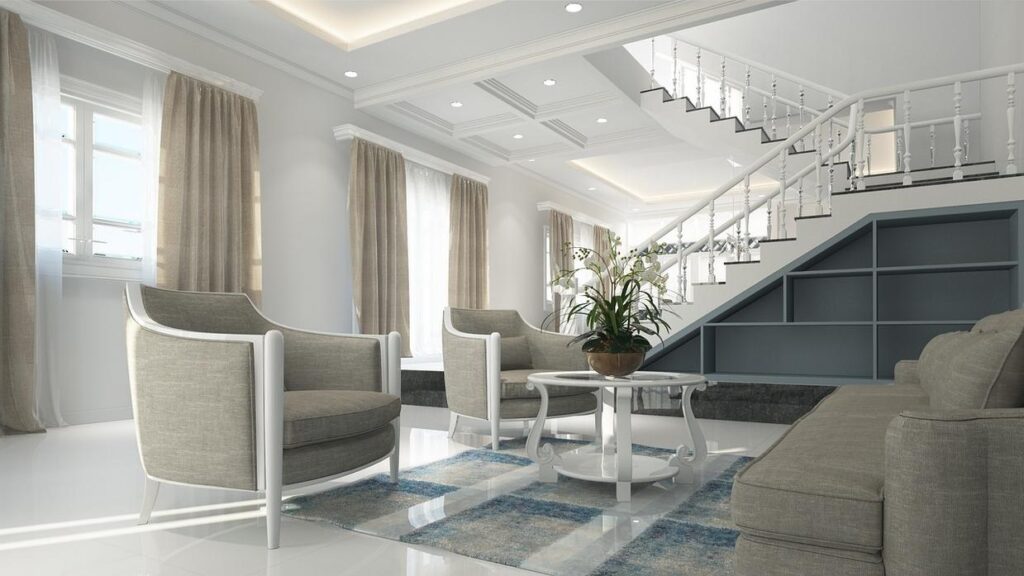
I’ve seen too many homes that look like they were decorated by an algorithm.
You walk in and something feels off. Everything matches but nothing connects. The space looks good in photos but doesn’t feel like anyone actually lives there.
You’re probably here because you want your home to feel different. Not just styled. Actually yours.
Here’s what most people get wrong: they start with trends instead of starting with themselves. They see a look they like and try to copy it. Then they wonder why their space feels hollow.
This guide shows you how to design from the inside out. I’ll walk you through strategies that work whether you’re starting from scratch or fixing what’s not working now.
We’ve studied what makes spaces feel alive at interior design drhinteriorly. Not just pretty. Alive. The kind of rooms where you actually want to spend time.
You’ll learn how to build a design that reflects who you are, not what’s popular right now. How to make choices that create flow instead of clutter. How to turn your vision into something real.
No mood boards that go nowhere. Just a clear path to a home with soul.
The Foundation of Innovation: Designing for Your Life, Not Just Your Look
The ‘Lifestyle Audit’: The First Step to a Functional Home
Forget aesthetics for a moment.
How do you actually live?
I mean really live. Not the Instagram version where everything looks perfect. The real version where you work from your dining table and your gym bag lives by the front door for three days straight.
Here’s what I do with every client at drhinteriorly. We start with a lifestyle audit.
Track one full week. Write down where you spend time in each room and what you’re doing. You’ll be surprised. That formal living room you thought you needed? You’ve sat there twice in six months.
Meanwhile, you’re cramped at the kitchen counter every morning trying to answer emails while making coffee.
Some designers say you should plan for how you want to live. That sounds nice but it rarely works. You end up with a yoga corner you never use and no place to charge your devices.
Start with reality. If you work from home, you need a real workspace (not just a laptop on the couch). If you host friends every weekend, your dining setup matters more than that guest bedroom.
The Power of Materiality and Texture
Innovation isn’t just about color. It’s about feeling.
Walk into most homes and everything feels the same. Smooth walls. Smooth floors. Smooth furniture. Your eye has nothing to grab onto.
I layer materials to create spaces that feel alive.
Start with your anchor material. Wood brings warmth. Stone adds weight and permanence. Metal introduces edge. Pick one as your base.
Then build from there. A linen sofa against a wood accent wall. Velvet pillows on a leather chair. A bouclé ottoman next to a metal side table.
The rule? Combine at least three different textures in every room.
Here’s a real example. I worked on a living room last month that felt cold even though the colors were warm. We added a chunky knit throw, swapped smooth curtains for textured linen panels, and brought in a jute rug under the existing furniture.
Same room. Same layout. Completely different feel.
You don’t need to replace everything. Just add texture where you can touch it. Throws, pillows, rugs (these are your easiest wins).
Your home should feel like something, not just look like something.
Strategic Space and Light: The Architecture of Ambiance
‘Zoning’ Open-Plan Spaces for Maximum Functionality
You know that moment when you walk into a massive open-plan room and think “this is amazing” and then realize you have no idea where to put your couch?
Yeah. We’ve all been there.
Here’s the truth about open-plan living. It looks great in magazines but can feel like you’re eating dinner in your bedroom and sleeping in your kitchen if you don’t set it up right.
The solution isn’t adding walls (though some days you’ll be tempted).
I use what I call invisible boundaries. An area rug under your dining table tells your brain “this is where we eat” without needing a single piece of drywall. A bookshelf perpendicular to the wall creates a natural divide between your living area and home office.
Furniture groupings work like magic too. Pull your sofa away from the wall and face it toward a couple of chairs. Suddenly you’ve got a conversation zone that feels separate from everything else.
And lighting? That’s your secret weapon. A pendant over the dining table defines that space instantly. Floor lamps in the living area create their own little world.
(Pro tip: If you can see your bed from where you eat breakfast, you need better zoning. Trust me on this.)
The goal with drhinteriorly home design from drhomey is making each zone feel intentional. Not accidental.
The Three Layers of Lighting: Crafting Mood and Purpose
Let me guess. You’ve got one ceiling light and maybe a lamp somewhere.
And you wonder why your space feels flat.
Most people think lighting is just about seeing stuff. But it’s really about creating atmosphere and making your space actually work for you.
I break it down into three layers.
Ambient lighting is your foundation. This is the overall light that fills the room. Ceiling fixtures, recessed lights, or even a chandelier. It’s the base layer that keeps you from bumping into furniture.
But stop there and your room feels like a dentist’s office.
Task lighting is where you get specific. Reading lamp by your chair. Pendant lights over the kitchen island. Under-cabinet strips so you can actually see what you’re chopping. This is the stuff that makes activities possible without squinting.
Accent lighting is the fun part. Picture lights on your artwork. LED strips behind your TV (yes, I went there). Uplighting on a plant in the corner. This layer adds drama and draws attention to what you want people to notice.
When you combine all three? That’s when a room goes from “fine” to “wait, can I just live here forever?”
The trick is putting them on different switches so you can adjust based on mood. Dinner party? All three layers. Movie night? Kill the ambient and keep it moody.
Embracing ‘Negative Space’ for a Calmer, Curated Feel
Here’s something nobody wants to hear.
That empty corner doesn’t need a plant.
I know. Revolutionary.
But seriously, the best thing you can do for your space is leave some of it alone. We’re so conditioned to fill every surface and cover every wall that we forget breathing room is part of good interior design drhinteriorly.
Negative space is just a fancy term for emptiness. And emptiness is underrated.
When you cram furniture into every corner and hang art on every wall, your eye doesn’t know where to land. Everything competes for attention and nothing wins.
But leave some walls bare? Suddenly the art you do have actually gets noticed.
Keep that side table clear instead of piling it with books and candles? Your room feels twice as big.
(It’s like when you clean out your closet and realize you’ve been living in chaos for no reason.)
I’m not saying go full minimalist monastery. But I am saying that what you choose not to include matters just as much as what you put in.
Think of it this way. A great sentence doesn’t use every word in the dictionary. A great room doesn’t use every piece of furniture you own.
Give your key pieces room to breathe. Let that beautiful sofa stand out instead of crowding it with throw pillows that multiply like rabbits.
Your space will feel calmer. More intentional. Less like a storage unit with a couch in it.
A Modern Approach to Color and Pattern
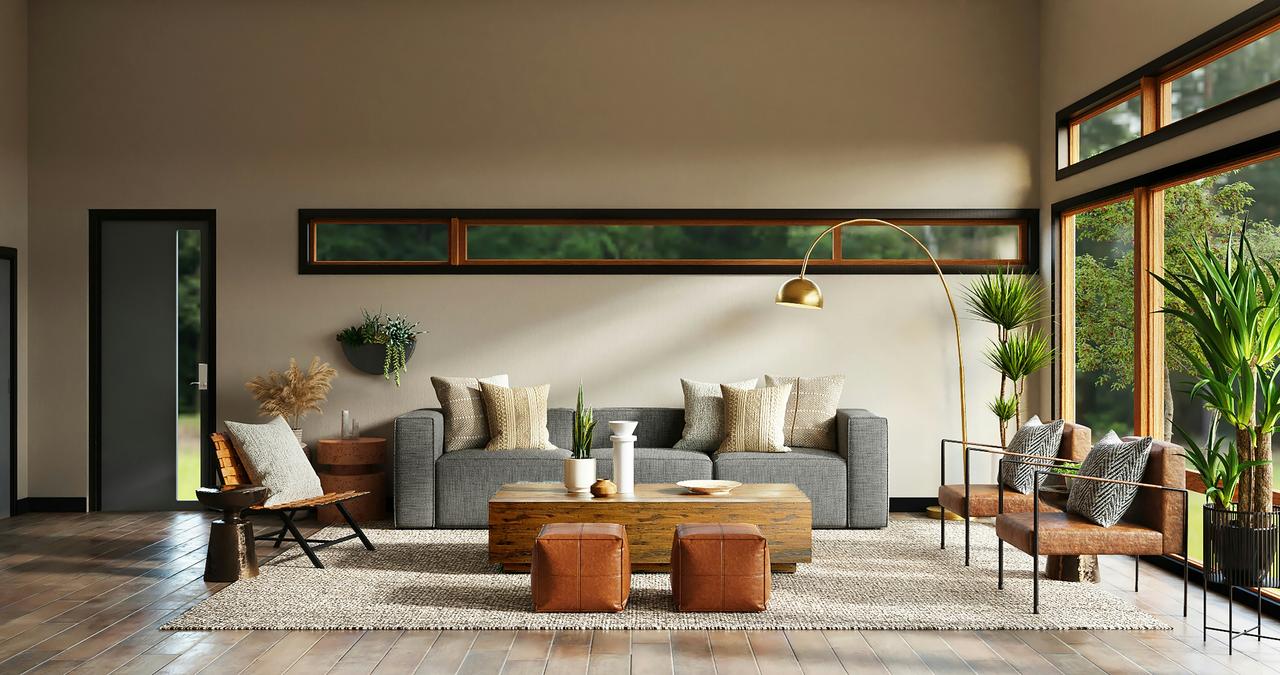
You’ve probably heard about the 60-30-10 rule.
It’s that classic formula where 60% of your room is one dominant color, 30% is a secondary color, and 10% is your accent.
And it works. I won’t pretend it doesn’t.
But here’s what I’ve noticed. Most people treat it like gospel. They follow it so strictly that their rooms end up feeling safe but forgettable.
Evolving the 60-30-10 Rule for a Bolder Palette
The rule exists for a reason. It creates balance. It keeps things from feeling chaotic.
But what if you want more?
I’ve started using that 10% accent differently. Instead of a throw pillow in a bright color, try a bold patterned wallpaper on one wall. It breaks the formula while still respecting the proportions.
Or go rogue and add a fourth color. Not everywhere. Just in small, unexpected places (a lamp base, picture frames, a single chair).
The key is intention. You’re not randomly throwing colors together. You’re making a choice and committing to it.
Biophilic Design: Connecting Your Home to Nature
This isn’t about buying a fiddle leaf fig and calling it a day.
Biophilic design means bringing natural elements into your space in a way that actually affects how you feel. Research from the Journal of Environmental Psychology shows that natural elements in interior spaces reduce stress and improve wellbeing.
Start with color. Think warm terracottas, soft sage greens, and sandy neutrals. Colors that exist outside your window.
Then layer in texture. Linen curtains. A jute rug. Wood furniture with visible grain.
Patterns matter too. Look for wallpapers or fabrics with organic shapes. Leaves, water ripples, stone formations. Your brain recognizes these patterns and relaxes.
Creating a ‘Jewel Box’ Moment in Small Spaces
Small rooms scare people.
They think they need to keep everything light and minimal or the space will feel cramped. But that’s backwards thinking.
A powder room or entryway is your chance to go big. I call it the jewel box approach, and it’s one of my favorite strategies in drhinteriorly.
Use that dramatic wallpaper you’ve been eyeing. Paint the walls a deep emerald or navy. Install a statement light fixture that feels too fancy for a half bath.
Why does this work?
Because you’re only in these spaces for a few minutes. The intensity doesn’t overwhelm you. It surprises you. It makes an impression.
I’ve seen a boring hallway transform into the most talked-about part of a house just by adding bold pattern and saturated color.
The trick is committing fully. Half measures make small spaces look confused. Go all in or go home.
The Art of Curation: Finishing with Personality
Blending High and Low for a Collected Look
I want you to stop thinking about your space as something you need to finish all at once.
The best rooms feel like they happened over time. Because they did.
You don’t need to drop thousands on every piece. What you need is a smart mix. One quality sofa paired with a vintage coffee table you found at an estate sale. A statement light fixture from a design showroom next to shelves you built yourself.
This is what interior design drhinteriorly is really about. Creating spaces that feel personal, not staged.
Here’s what works. Pick two or three pieces worth the investment. Your sofa. Your bed. Maybe a dining table. These are things you use every day and they need to last.
Everything else? Fair game for mixing in budget finds.
I’ve seen $50 thrift store chairs reupholstered to look like they cost ten times that. Target lamps that hold their own next to designer pieces. The trick is knowing what to splurge on and what to skip.
Making Art the Centerpiece
Art changes everything.
But most people get it wrong. They hang pieces too high (your center point should be at eye level, around 57-60 inches). They go too small. They treat it like an afterthought.
Here’s what I tell everyone. Start with the art and build around it.
Not the other way around.
When you’re choosing pieces, think about scale first. A tiny print on a big wall just looks lost. You want your art to command attention without overwhelming the room.
| Wall Size | Recommended Art Width |
|————–|————————–|
| Small (under 6 feet) | 18-24 inches |
| Medium (6-10 feet) | 24-36 inches |
| Large (over 10 feet) | 36+ inches or gallery wall |
And here’s something nobody talks about. Your art should tell your story. Not what you think looks expensive or what’s trendy right now.
I worked with someone who collected vintage concert posters. We framed them properly and hung them in her living room. Guests always ask about them. That’s what you want.
If you’re wondering who has the best house plans drhinteriorly, the answer is whoever creates spaces that actually reflect how you live.
Your walls are prime real estate. Use them to show what matters to you.
Your Blueprint for an Inspired Home
You now have the tools you need.
I’ve walked you through lifestyle-based planning, color theory that actually works, and ways to think about space differently. These aren’t just ideas. They’re strategies you can use starting today.
I get it. Moving beyond cookie-cutter design feels overwhelming. You see beautiful spaces online and wonder how to make that happen in your own home without hiring a full team or spending a fortune.
The answer is simpler than you think.
Focus on the core strategies: space, light, materiality, and personal curation. When you understand how these elements work together, you can create a home that reflects who you really are.
Not someone else’s vision. Yours.
Here’s what I want you to do: Pick one room. Choose one strategy from this guide. Maybe it’s rethinking your lighting or finally curating that gallery wall you’ve been putting off.
Start there.
You don’t need to transform your entire house overnight. Small changes build momentum. One room leads to another, and before you know it, you’ve created a space with soul.
interior design drhinteriorly exists to help you see what’s possible. Your home should inspire you every single day.
Now go make it happen.