I’ve seen too many people fall in love with a floor plan online, only to realize six months into construction that it doesn’t work for how they actually live.
You’re probably looking at dozens of house plans right now. They all look good in the photos. But which one is actually right for you?
Here’s the truth: picking a plan based on pretty renderings is how you end up with a beautiful house that frustrates you every single day.
I spent years working with homeowners who thought they knew exactly what they wanted. Then we’d sit down and talk about their real life. How they cook. Where the kids do homework. How often guests stay over. Suddenly, that dream plan didn’t make sense anymore.
This guide shows you how to decide on house plans drhinteriorly by working with a design professional who gets it. Someone who asks the right questions before you commit.
We’re going to walk through the process of choosing a plan that fits your lifestyle, not just your Pinterest board. One that works with your budget and grows with your future.
No fluff about dream homes. Just practical steps to avoid expensive mistakes and end up with a space you’ll actually love living in.
Laying the Foundation: Your Pre-Design Homework
Most people walk into their first designer meeting with a Pinterest board and a vague idea of what they want.
Then they wonder why the process feels confusing.
Here’s what I learned. The work you do before you ever talk to a designer matters more than the meeting itself.
I’m going to walk you through the homework that actually makes a difference.
Define Your Lifestyle DNA
This isn’t about what looks good on Instagram.
Start by writing down what you actually do every day. Do you wake up early and need morning light in the kitchen? Do you host dinner parties twice a month? Do your kids do homework at the dining table while you cook?
Now here’s the tricky part. You need to separate how you live now from how you want to live.
Maybe you’re cramped in an apartment but dream of hosting Sunday brunches. That matters. Your designer needs to know both versions of you.
Create a Functional Wishlist
Grab a piece of paper and draw a line down the middle.
On the left, write “Must-Haves.” These are non-negotiables. Four bedrooms. A home office. Main-floor laundry. Things you absolutely need to function.
On the right, write “Nice-to-Haves.” A reading nook. A walk-in pantry. A three-car garage. Things that would be great but won’t break the deal.
This simple exercise saves hours of back-and-forth later when you’re trying to decide on how to decide on house plans drhinteriorly.
Gather ‘Feeling’ Inspiration
Stop saving random pretty pictures.
I mean it. Most people collect images without knowing why they like them. That doesn’t help your designer.
Instead, look for images that capture a feeling. Cozy. Airy. Formal. Relaxed. When you save something, write down what emotion it gives you.
A good designer can turn “I want to feel calm when I walk in” into actual layout decisions. But they can’t read your mind.
Establish a Realistic Budget
This is where people get stuck.
Your budget isn’t just the cost of drawing plans. It includes construction, site work, permits, and everything you’ll put inside once the walls are up.
Some folks say you shouldn’t tell your designer your full budget because they’ll just spend it all. But that’s backwards thinking.
Being transparent from day one means you get a plan you can actually build. Not a fantasy you’ll have to water down later (which costs more in redesign fees anyway).
Write down the real number. The one that won’t put you in financial trouble. Then share it.
The Kickoff Meeting: How to Effectively Brief Your Designer
You’ve done your homework. You’ve scrolled through plans and marked up your favorites.
Now comes the part that actually matters.
Sitting down with your designer and making sure they understand what you need. Not what you think looks pretty. What you actually need.
A lot of people walk into this meeting and just hand over a stack of plans. They expect the designer to read their mind. That’s where things go sideways.
I’m going to show you how to make this conversation count.
Communicate Your ‘Why’
Don’t just show your designer the plans you like. Tell them why you picked them.
Talk about what’s broken in your current space. Maybe you have nowhere to drop bags and coats when you walk in. Or your kitchen feels cut off from where your family actually hangs out.
These details matter more than you think. When I know the pain points, I can figure out how to decide on house plans drhinteriorly style that actually solve your problems.
Your designer needs this context. Without it, they’re just guessing.
Discuss the Site and Orientation
Here’s something most people miss.
A beautiful plan can completely fail on the wrong lot. The same layout that works facing north might be miserable facing south.
Your designer will look at views, sun patterns, and how the land slopes. They’ll make sure windows capture morning light instead of your neighbor’s bathroom window. (Trust me, that happens more than it should.)
This is where plans stop being theoretical and start being real.
Analyze Flow and Circulation
Think about your actual daily routine. Carrying groceries from the car. Getting kids from their rooms to the laundry. Morning coffee to the home office.
A good designer traces these paths through potential layouts. They’re looking for friction points where your day gets harder than it needs to be.
The goal is simple. Your home should make life easier, not more frustrating.
Be Honest About Your Limits
Tell your designer what you’re working with. Budget, timeline, how quickly you can make decisions.
Some people think hiding constraints will get them better results. It doesn’t. It just leads to plans you can’t actually build.
When your designer knows the real parameters, they can guide you toward something that works in the real world. Not just on paper.
Beyond the Blueprint: Evaluating Plans Through a Professional Lens
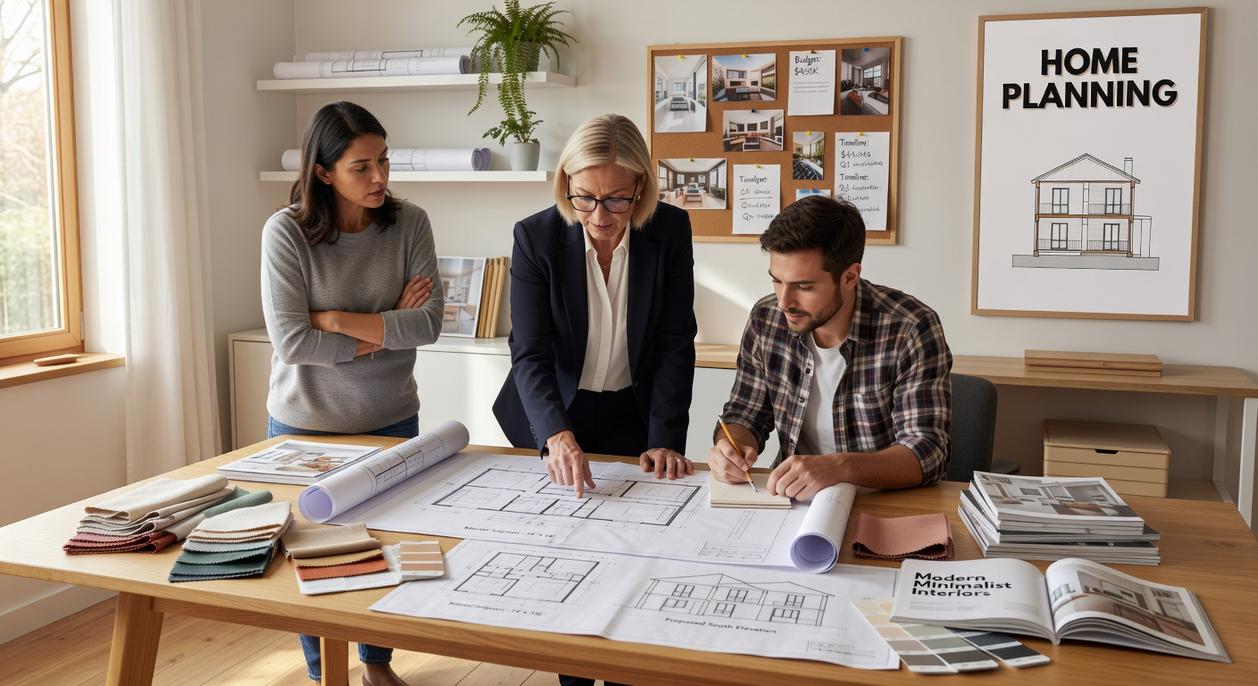
Most people look at a floor plan and see walls and rooms.
I see problems waiting to happen.
After spending years reviewing house plans with clients, I’ve noticed something. The biggest regrets don’t come from the choices people make. They come from the things they never thought to question.
You know what’s interesting? When I first started helping people how to decide on house plans drhinteriorly, I assumed everyone could visualize spaces. Turns out most can’t. They look at a rectangle labeled “master bedroom” and think it looks fine. Then they move in and realize the room feels like a shoebox.
Here’s what I do differently.
Visualize in 3D
A floor plan is flat. Your home isn’t.
I help you mentally walk through the space before you build it. We talk about ceiling heights and how rooms will actually feel when you’re standing in them. We consider where morning light hits the kitchen and whether your living room will feel dark by 4 PM in winter.
This matters more than you think. I had a client last year who almost signed off on a plan. We spent 20 minutes visualizing the space together and she realized the “open concept” layout would make her great room feel like a gymnasium.
Focus on the ‘Engine Rooms’
Everyone obsesses over the kitchen and master suite.
I get it. Those are the sexy spaces.
But you know what ruins a house? A laundry room that’s too small to fold clothes. A mudroom with nowhere to sit and take off your boots. Closets that can’t fit your actual stuff.
I scrutinize these spaces hard. Where’s the mechanical room? Is the pantry big enough? Can you actually use that coat closet or is it just wasted square footage?
Test with Furniture and Function
Here’s a simple trick that saves people thousands.
I map out your actual furniture on the plan. Your king bed. Your dining table. That sectional you already own.
You’d be surprised how often this reveals problems. Doorways that get blocked. Traffic patterns that don’t work. Rooms that look spacious on paper but can’t fit what you need.
Consider Future Needs
Some people say you should just design for today. Build what you need right now and worry about later when it comes.
I disagree.
Sure, you can’t predict everything. But you can think ahead. Will you want to age in this house? Are you planning to grow your family? What happens if you need a home office in three years?
I ask these questions because changing your mind after construction costs real money. Sometimes it’s impossible without major renovation.
Back in 2021, I worked with a couple who insisted they’d never need a first floor bedroom. Two years later his mother moved in and guess what? They’re now spending $40K to convert their study.
That’s the difference between looking at a plan and really evaluating it.
Making It Yours: The Power of Professional Customization
You buy a stock plan and think you’re done.
Then you start looking closer. That hallway feels dark. The kitchen island blocks the flow. You’re not sure where your dining table will actually fit.
I hear this all the time: “Can’t I just figure this out as I go?”
Sure. But here’s what happens when you do.
Identify High-Impact Modifications
A designer I worked with last month told me something that stuck. “Most people don’t realize a stock plan is a starting point, not a finish line.”
She was right. Even small changes make a huge difference. Moving a doorway three feet can suddenly give you wall space for furniture. Adding one window transforms a dark corridor into something you actually want to walk through.
The kitchen is where I see this most. A designer will look at your island and ask how you really cook. Do you need seating? More prep space? Better access to the fridge?
These aren’t massive overhauls. They’re smart tweaks that change how you live in the space.
Develop an Integrated Lighting Plan
Here’s what nobody tells you about how to find home plans drhinteriorly. The plan shows walls and rooms. It doesn’t show how you’ll actually see anything at night.
I’ve walked through too many new builds where someone said, “We’ll just add more lamps later.”
That’s not a lighting plan. That’s hoping for the best.
A designer layers your lighting before construction starts. Overhead for general light. Task lighting where you work. Accent lights to highlight what matters.
And they plan switch locations that make sense. Not just wherever the electrician thinks is easiest.
Connect the Plan to the Finishes
This is where everything comes together.
Your floor plan determines where tile meets hardwood. Where your cabinets end and your backsplash begins. How your materials flow from room to room.
A designer sees these connections early. They’ll tell you if that flooring transition is going to look awkward or if your cabinet layout creates weird gaps you’ll hate later.
One client told me, “I wish I’d known this before we started. Now I’m stuck with a tile edge that just stops in the middle of the room.”
Don’t be that person.
Building Your Dream with Confidence and Clarity
You came here to figure out which interior house plan works for your life.
Now you know what matters. Room flow, natural light, how your family actually lives day to day.
But I get it. The options can freeze you in place.
You’re looking at hundreds of floor plans and they all start to blur together. You wonder if you’re missing something important or making a choice you’ll regret for decades.
That’s where working with a professional designer changes everything.
They’ve seen what works and what doesn’t. They know how to translate your daily routines into a layout that makes sense. No more guessing if that kitchen island is too big or if you really need that extra bathroom.
Here’s what you should do: Find a designer who listens to how you live. Walk them through your morning routine, your weeknight dinners, how your kids use the space. Let them turn that into a plan that fits.
How to decide on house plans drhinteriorly comes down to this: invest in professional guidance now and you’ll save yourself from costly mistakes later.
Your floor plan isn’t just lines on paper. It’s the framework for every moment you’ll spend in that home.
Get it right from the start.