
I know what it’s like to stare at architectural plans and feel completely stuck on what comes next.
You’ve got the blueprint. You know where the walls go and how the rooms connect. But when you start looking for design inspiration online, it gets messy fast.
You save hundreds of images that look amazing. Then you try to picture them in your actual space and nothing clicks. The styles clash. The colors don’t work together. And you’re left wondering if any of this will actually look good in your home.
I’ve helped people move from empty floor plans to finished spaces they love. At DrH Interiorly, we don’t just collect pretty pictures. We figure out how to find home plans drhinteriorly that translate into real rooms you’ll want to live in.
This guide will show you how to find inspiration that actually fits your specific layout. Not random ideas that look good on Pinterest. Ideas that work with what you’re building.
You’ll learn how to look at your floor plan and know what styles make sense. How to filter out what doesn’t belong. And how to pull everything together into one clear vision before you start making decisions you can’t undo.
No more saving images you’ll never use. Just a clear path from blueprint to a home that feels like yours.
Start with Your Foundation: How to Read Your Home Plans for Design Clues
Decode Your Blueprint’s Language
I used to skip this step completely.
When I first started working on home designs, I’d jump straight to Pinterest. I’d save hundreds of photos and try to force those ideas into whatever space I was working with.
It never looked right. The furniture felt too big or the room felt cramped even though the inspiration photo looked perfect.
Here’s what I learned the hard way. Your home plans aren’t just technical drawings for your builder. They’re actually your best design tool.
I know that sounds backwards. Most people think blueprints are boring and inspiration boards are exciting. And sure, scrolling through beautiful rooms is more fun than staring at lines and measurements.
But those plans tell you everything you need to know about what will actually work in your space.
When you learn how to find home plans drhinteriorly and read them properly, you stop making expensive mistakes. You stop buying furniture that doesn’t fit or choosing paint colors that fight against your natural light.
Let me show you what to look for.
Analyzing Traffic Flow
Grab your floor plan and trace the main pathways with your finger.
Start at the front door. Where do people naturally walk? Which rooms connect to each other? Where will your family move through the space most often?
I made this mistake in my own living room. I placed a beautiful sectional right in the main pathway because it looked good in the layout. Within a week, everyone was squeezing past it or walking around the long way.
The traffic flow was right there on my plans. I just didn’t look.
Your heaviest traffic areas need durable flooring. Your furniture should frame these pathways, not block them. And your natural gathering spots? Those are usually where two or more pathways intersect.
Mark these on your plans before you pick a single piece of furniture.
Identifying Natural Light Sources
Look at every window and door on your blueprint.
Which direction do they face? How big are they? What time of day will each room get direct sunlight?
This matters more than you think. I once chose a gorgeous deep blue for a north-facing bedroom because I saw it in a magazine. The room felt like a cave. That same color would’ve been perfect in a south-facing space with afternoon sun.
Your plans show you exactly where light enters. A room with east-facing windows gets bright morning light but can feel dim by evening. West-facing rooms do the opposite.
Use this information when you’re selecting colors and materials. Light rooms can handle darker palettes. Dim spaces need lighter, reflective surfaces to bounce whatever light you have.
It’s all there in your how to decide on house plans drhinteriorly documentation.
Understanding Scale and Proportion
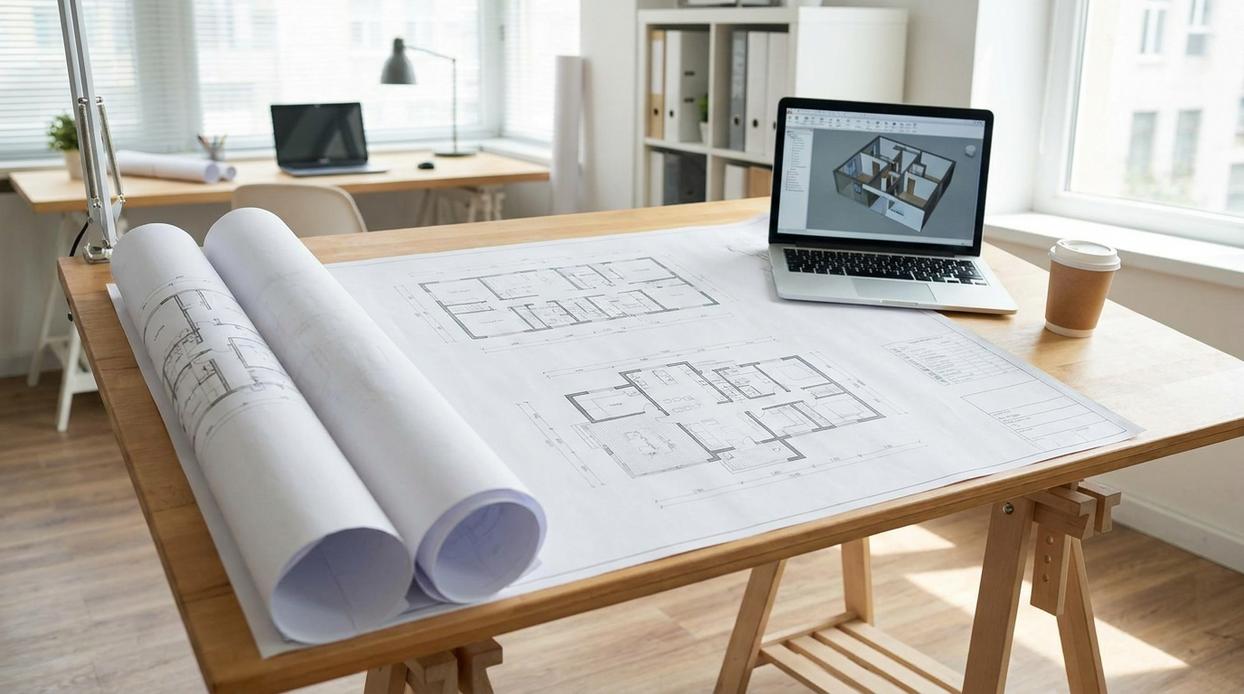
Here’s where the dimensions on your plans save you from my biggest mistake.
I fell in love with a dining room photo. The table, the chairs, the chandelier. Everything was perfect. So I ordered a similar table.
It was massive. Completely wrong for my 12×14 dining room. The inspiration photo? That room was probably 16×20.
Before you save any inspiration image, check the room dimensions. Most plans include measurements for every space. Write them down. When you’re browsing design ideas, look for rooms with similar proportions.
A 10-foot ceiling needs different lighting than an 8-foot ceiling. A 200-square-foot bedroom can’t handle the same furniture arrangement as a 300-square-foot one.
Your plans give you the exact numbers. Use them to create a mental picture of your actual space, not someone else’s.
This simple step prevents so many headaches later.
Curating Your Vision: Sources for Authentic and Relevant Inspiration
Moving Beyond the Generic Algorithm
I remember scrolling through Pinterest at 2am when I was planning my first renovation.
Every image looked perfect. Every room felt like it belonged in a magazine. But none of it felt like me.
That’s when I realized something. The algorithm feeds you what’s popular. Not what’s right for your space or your life.
Here’s what actually works.
Niche Publications & Design Blogs
Stop looking at general home design sites that show you everything.
I started following blogs that focused on one specific thing. Scandinavian living. Biophilic design. Even brutalism (which sounds harsh but can be beautiful when done right).
When you narrow your focus, you find details that matter. The way light hits a specific type of wood. How plants change the feel of concrete. Things you’d miss in a generic roundup.
The Power of ‘Real Home’ Tours
This changed everything for me.
I stopped looking at 4000 square foot dream homes and started searching for tours of spaces that matched my actual floor plan. A 1200 square foot condo. Two bedrooms. One bathroom.
Suddenly the ideas weren’t just pretty. They were possible.
You can see how someone solved the same layout problem you’re facing. Where they put storage when there’s no closet space. How they made a small dining area work.
It’s the difference between inspiration and actual application.
Look to Hospitality Design
Boutique hotels taught me more about design than any home tour ever did.
These spaces have to work hard. They need to look good and survive constant use. The materials are durable. The lighting creates mood without being fussy. Every inch of space has a purpose.
I walked through a small hotel in Portland once and took notes on my phone. The way they used textured wall panels to add interest without taking up floor space. How the bathroom felt luxurious even though it was tiny.
Restaurants do this too. They’re masters at making you feel a certain way the moment you walk in.
Draw from Your Personal Story
I have a client who spent a year in Morocco.
Instead of copying trends from drhinteriorly or design magazines, we pulled colors from her travel photos. Deep blues. Terracotta. Brass fixtures that reminded her of the riads she stayed in.
Her home doesn’t look like anyone else’s. And that’s the point.
Think about where you’ve traveled. What you collect. Even what’s hanging in your closet right now.
I wear a lot of neutral tones with one bold piece. My home follows the same pattern. Calm base with moments of color that mean something to me.
When you’re ready to move forward, learning how to find home plans drhinteriorly can help you match your vision to actual layouts.
Your inspiration should tell your story. Not the algorithm’s.
The DrH Interiorly Method: Building a Functional Mood Board
Transforming Ideas into an Actionable Plan
Let me tell you what most people get wrong about mood boards.
They pin a gorgeous kitchen with marble countertops. Then they save a cozy bedroom with exposed brick. Next comes a minimalist bathroom that’s all white subway tile.
Three months later, they stare at their collection and have no idea what they actually want.
Some designers say mood boards are just for inspiration. That you shouldn’t overthink them. Just save what speaks to you and figure it out later.
But here’s the problem with that approach.
You end up with a Pinterest board that looks like five different homes smashed together. No direction. No plan. Just pretty pictures that don’t talk to each other.
I’ve seen this happen too many times when people try to figure out how to find home plans drhinteriorly and then jump straight into collecting images without a framework.
There’s a better way.
Start with Design Pillars
Before you save a single image, write down three to five words. Not sentences. Just words that capture what you want this space to feel like.
Maybe it’s Warm. Textural. Minimal. Functional.
Or perhaps it’s Airy. Natural. Collected. Lived-in.
These become your filter. Every image you save should connect to at least one of these pillars. If it doesn’t, you skip it. Even if it’s beautiful.
This is what separates a random collection from an actual plan.
Organize by Room, Not by Item
I see people create boards called “Lighting I Love” or “Dream Furniture.”
Don’t do that.
Create a separate section for each room. Your kitchen gets its own space. Your primary bedroom gets its own. The living room stands alone.
Why? Because a velvet sofa might look incredible in one room’s context but completely wrong in another. You need to see how pieces work together in the actual space where they’ll live.
When you walk into a room with the right design, you feel it before you see the details. The air feels different. Cooler in a minimalist space. Warmer where there’s wood and texture. The light hits surfaces in ways that make you want to stay.
That’s what you’re building toward.
Go Beyond Pretty Pictures
A functional mood board isn’t just images.
Add color swatches. Not the paint chip itself, but a screenshot or photo of the exact shade you’re drawn to. Write down how it makes you feel. Does that sage green remind you of early morning fog? Does the terracotta feel like sun-baked clay under your fingers?
Include text snippets. A line from an article. A phrase that captures the mood. “Soft enough to sink into but structured enough to last.”
Link to actual products and materials. That specific linen fabric. The exact tile you saw. The light fixture that stopped you mid-scroll.
This is where most mood boards fall apart. They stay in the inspiration phase and never become actionable.
The Why Behind Every Save
Here’s the part that changes everything.
For every single image you add, write one sentence about why you saved it.
Not “I like this kitchen.”
Be specific. “Saved for the way natural light pools on the white oak floors.” Or “The brass hardware against the deep green cabinets creates contrast without feeling harsh.”
Maybe it’s not even the main subject. You saved a living room photo, but what you really want is the texture of that chunky knit throw draped over the arm of the sofa. Write that down.
When you’re ready to actually design or work with someone, these notes become gold. You’re not guessing what past-you was thinking. You know exactly which element mattered.
You can almost feel the difference this makes. Running your hand along a wall and knowing whether you want smooth plaster or something with more grip. Standing in an empty room and sensing whether it needs the weight of dark wood or the lightness of painted pieces.
That’s what a functional mood board gives you.
Not just ideas. A plan you can actually follow.
From Mood Board to Reality: Applying Your Inspiration to Your Home Plans
The Final Translation Step
You’ve got your mood board. You’ve got your floor plans.
Now what?
This is where most people freeze up. They have beautiful inspiration images saved but can’t figure out how to actually use them when making real decisions about their space.
I see two approaches here.
Some people try to wing it. They look at their mood board, look at their plans, and hope it all comes together during construction. The problem? You end up making expensive mistakes because you never tested anything beforehand.
Others get paralyzed by perfection. They spend months tweaking digital renderings and hiring professionals to visualize every detail. Sure, you get certainty. But you also burn through budget before you’ve bought a single tile.
There’s a better way.
The Tracing Paper Technique
Print out your floor plans. Grab some tracing paper from any office supply store (costs about three dollars).
Lay the tracing paper over your plans and sketch furniture arrangements based on what you loved in your mood board images. That cozy reading nook you pinned? Draw it in. See if it actually fits.
This is how to find home plans drhinteriorly work in real life without commitment.
If the layout feels wrong, you just grab another sheet. No software to learn. No expensive revisions.
Material Mapping
Now take your mood board and get specific with your plans.
That subway tile you saved? Mark exactly which bathroom wall gets it. The paint color from that Architectural Digest photo? Note which rooms and which walls.
Write it directly on your plans.
This isn’t about being rigid. It’s about catching problems early. You might realize that gorgeous dark tile you love would make your small bathroom feel like a cave.
The Cohesion Check
Walk through your plans room by room. On paper first, then mentally.
Does the design flow? Or does it feel like three different homes mashed together?
Compare what you planned against your original design vision. If you said you wanted “warm minimalism” but your material notes read like a maximalist fever dream, something’s off.
This final check catches the inconsistencies before you’re standing in a tile shop making panic decisions.
Your Blueprint for a Beautifully Inspired Home
You came here feeling stuck between Pinterest boards and floor plans.
I get it. You had the inspiration but no clear path to turn it into a real design that works in your actual space.
Now you have a process that makes sense.
Start with your architecture. Let your floor plan guide you instead of fighting against it. Then build your mood board around what your home actually needs.
This isn’t about collecting pretty pictures anymore. It’s about creating a design vision that fits your life and your layout.
The overwhelming feeling of scrolling through endless inspiration is gone. You have a method now.
Here’s what to do next: Print your home plans from how to find home plans drhinteriorly. Define your three Design Pillars (the non-negotiables that matter most to you). Start curating an inspiration board that reflects how you actually want to live.
Your final design will be both beautiful and perfectly suited to your space because you’re building it the right way.
Take that first step today. Your home is waiting for the vision only you can create.